
- DEALS
- AUSTRALIA CRUISE DEALS
- AFRICA, MIDDLE EAST & INDIAN OCEAN CRUISE DEALS
- ALASKA CRUISE DEALS
- ANTARCTICA CRUISE DEALS
- ARCTIC CRUISES
- ASIA CRUISE DEALS
- ATLANTIC ISLANDS CRUISE DEALS
- CARIBBEAN CRUISE DEALS
- CENTRAL AMERICA CRUISE DEALS
- CHRISTMAS CRUISES
- EUROPE CRUISES
- ICELAND CRUISES
- KIMBERLEY CRUISE DEALS
- MEDITERRANEAN CRUISE DEALS
- NEW ZEALAND CRUISE DEALS
- NORTH AMERICA CRUISE DEALS
- NORTHERN EUROPE & SCANDINAVIA CRUISE DEALS
- OCEANIA & PACIFIC ISLANDS CRUISE DEALS
- SOLO TRAVELLER CRUISE DEALS
- SOUTH AMERICA CRUISE DEALS
- TAHITI, TONGA & COOK ISLANDS
- TRANSATLANTIC CRUISE DEALS
- LATEST PONANT CRUISE DEALS
- All dealsSee all
- DESTINATIONS
- SHIPS
- EXPERIENCES
- LUXURY EXPEDITION CRUISES
- LUXURY YACHT CRUISES
- SMALL SHIP CRUISES
- EXPEDITION CRUISES
- LUXURY ADVENTURE CRUISES
- KIMBERLEY CRUISES
- POLAR CRUISES
- WILDLIFE CRUISES
- CULTURAL CRUISES
- PHOTOGRAPHY CRUISES
- SOLO CRUISES
- FAMILY LUXURY CRUISES
- LUXURY HONEYMOON CRUISES
- LUXURY CRUISES FOR COUPLES
- A DIFFERENT WAY TO CRUISE
- OUR VIDEOS
- PLAN YOUR CRUISE
- CRUISE THEMES
- ABOUT

You're not alone.
For some travellers, the possibility of seasickness or motion sickness can be one of the biggest concerns when planning a cruise. The good news is that there are practical steps you can take to reduce the likelihood and manage symptoms if they occur.
Seasickness happens when the motion your inner ear senses doesn't match what your eyes see. It can occur on any vessel, although the likelihood and intensity can vary depending on the ship, sea conditions, itinerary and individual sensitivity.
Understanding where to stay, what to pack and how to prepare before departure can help you feel more confident about your cruise.

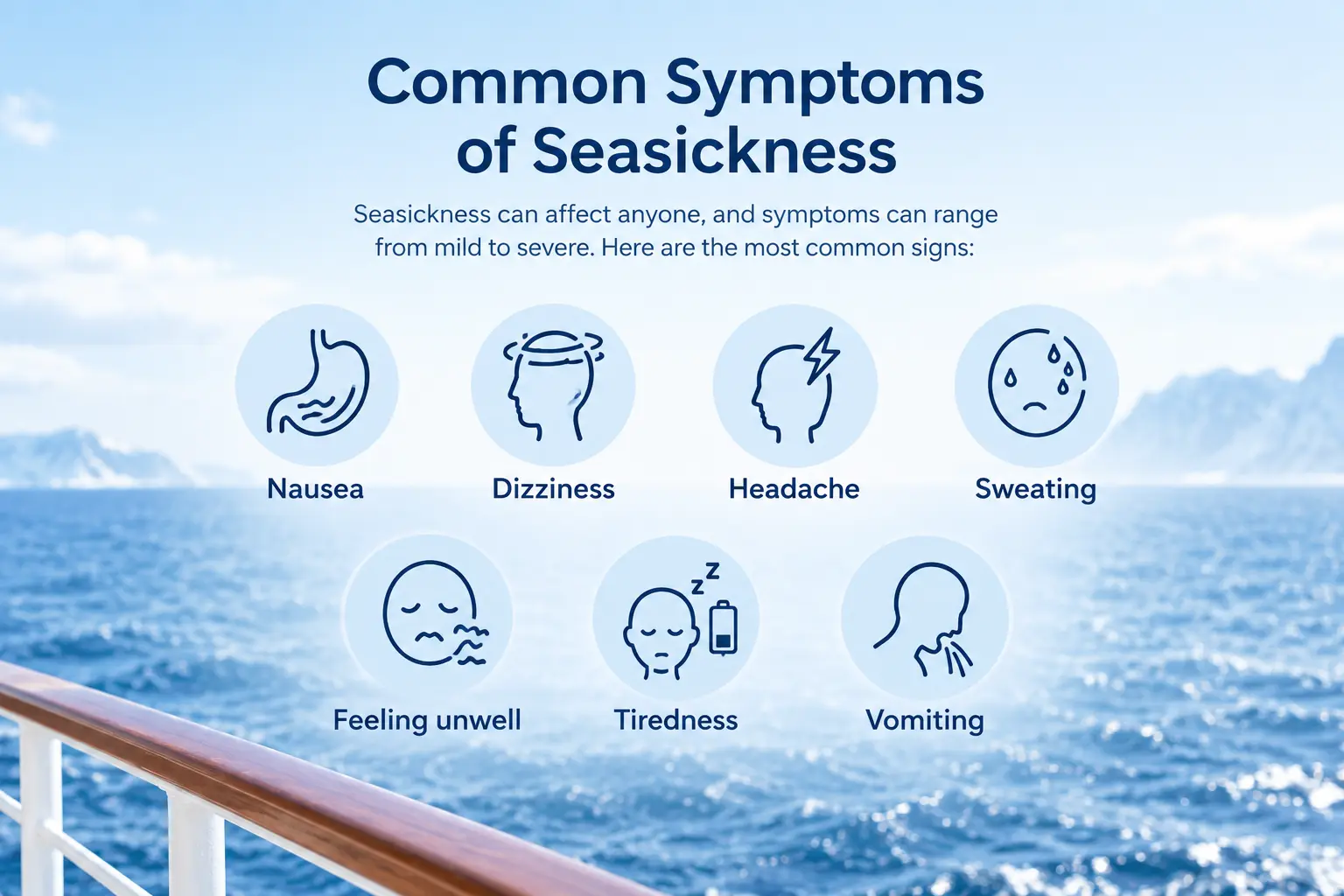
Seasickness is a form of motion sickness that can occur when travelling on a moving vessel.
Your brain receives information about movement from several parts of your body, including your inner ear and your eyes. When these signals don't agree, the mismatch can cause symptoms associated with motion sickness.
Symptoms may include:
- Nausea
- Dizziness
- Headache
- Sweating
- Feeling unwell
- Tiredness
- Vomiting
Not everyone experiences seasickness, and people who rarely experience motion sickness can still feel unwell in certain sea conditions.

PONANT's vessels are designed for cruising, but no cruise ship can completely eliminate movement at sea.
How much movement you experience can depend on several factors, including:
- Sea conditions
- Wind
- Weather
- The ship
- Your cabin location
- Your individual sensitivity
- The itinerary
- Whether you're indoors or outdoors
Expedition voyages can also visit more remote regions where sea conditions can sometimes be challenging.
That doesn't mean you should avoid an expedition cruise if you're concerned about seasickness. It simply means that understanding the potential conditions and preparing appropriately is worthwhile.

Anyone can experience motion sickness, but some people are more susceptible than others.
You may be more sensitive if you:
- Regularly experience motion sickness in cars, planes or boats
- Have previously experienced seasickness
- Are travelling during rough sea conditions
- Spend extended periods reading or looking at screens while the ship is moving
- Are tired or dehydrated
Your previous experiences can provide a useful indication, but they cannot guarantee how you'll feel on a particular voyage.
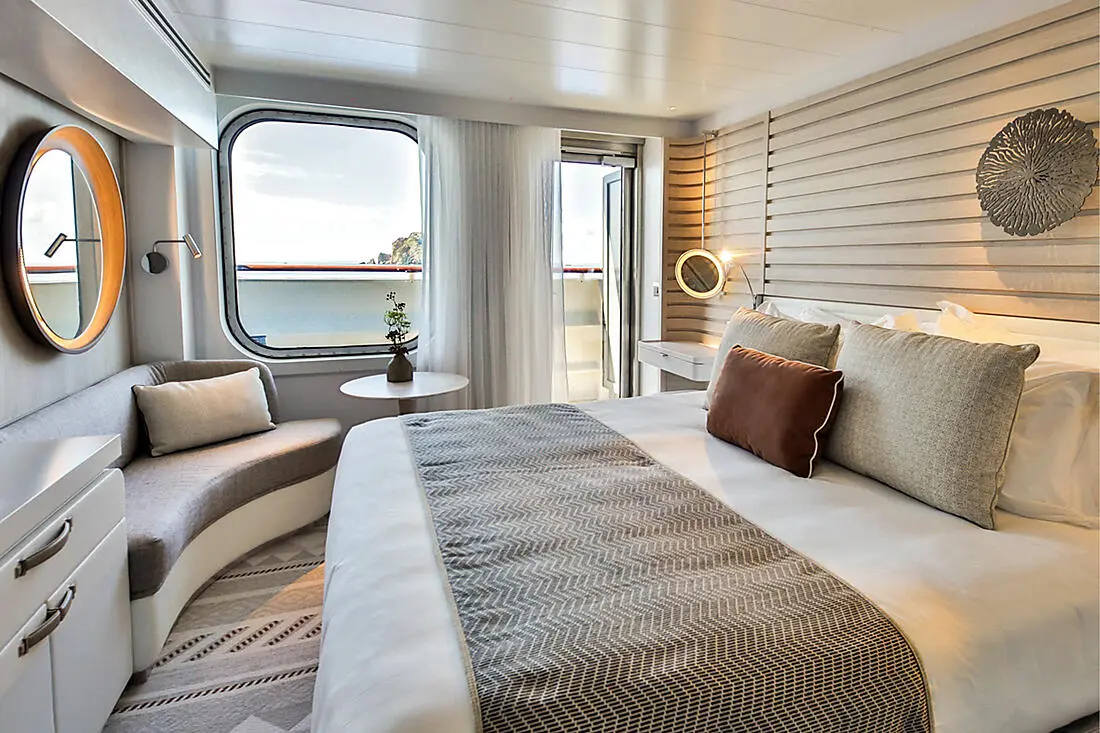
Your cabin location can be an important consideration if you're concerned about motion.
As a general principle, movement tends to be felt more toward the front and rear of a vessel than closer to its centre.
Lower decks can also feel more stable than higher areas.
However, the exact experience depends on the design of the individual ship.
When comparing cabins, consider:
- Location on the ship
- Deck level
- Distance from the ship's centre
- Window or balcony
- Cabin category
- Your personal preferences
If seasickness is a major concern, tell your BlueSun Travel cruise specialist before selecting your cabin so they can help you consider the available options.
💡 BlueSun Insight
Don't Let Seasickness Stop You From Cruising
If you've experienced motion sickness before, it's understandable to be cautious about booking a cruise.
But seasickness doesn't necessarily mean cruising isn't for you.
Our BlueSun Insight: Treat seasickness as something to plan for rather than something to fear.
Choosing an appropriate cabin, understanding your itinerary and speaking with a healthcare professional about preventive options can give you greater peace of mind.
If you're unsure which PONANT ship or itinerary would be most comfortable for you, talk to a cruise specialist before booking.
A little preparation can make a big difference to your confidence.
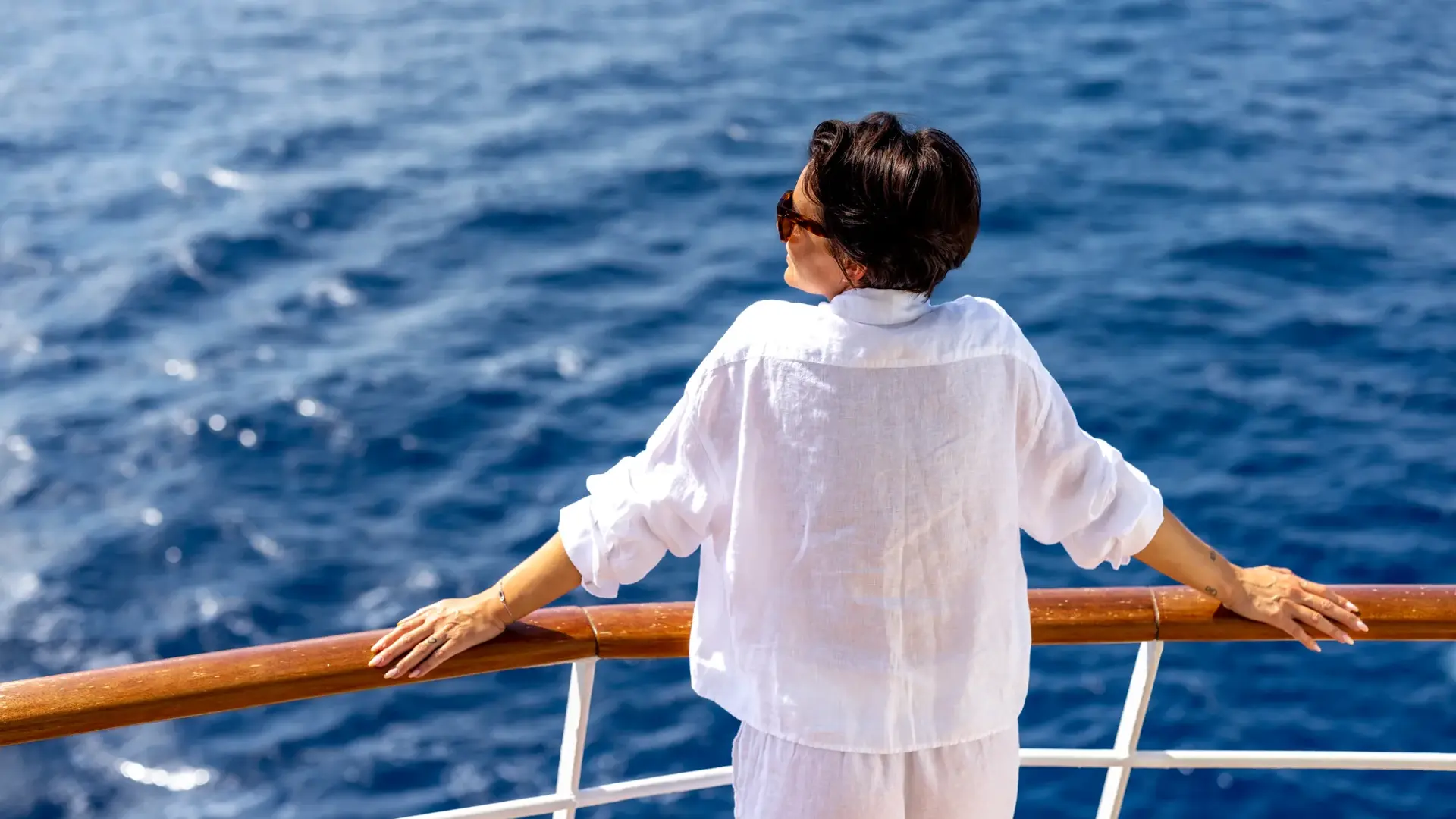
Look at the Horizon
When conditions permit, looking toward the horizon can help your visual system better match the movement your inner ear is detecting.
Spending time outside may also provide fresh air, which some travellers find helpful.
Avoid Reading
Reading books or concentrating on a phone or tablet while the ship is moving can make motion sickness worse for some people.
If you start feeling unwell, take a break from screens and reading.
Stay Hydrated
Dehydration can make you feel worse when you're already experiencing nausea or dizziness.
Drink water regularly throughout the day.
Eat Sensibly
Large, heavy meals may be uncomfortable when you're feeling motion sick.
Consider eating smaller, lighter meals if you notice that certain foods make your symptoms worse.
Get Plenty of Rest
Fatigue can make it more difficult to cope with feeling unwell.
Try to maintain your normal sleep routine and rest when necessary.
Get Some Fresh Air
If you're feeling uncomfortable, moving to an area with fresh air and a clearer view of the horizon may help.
Always follow the crew's safety instructions and remain in permitted areas.
There are medications available to help prevent or manage motion sickness.
However, medications aren't suitable for everyone and can have side effects.
Some motion-sickness medications can cause drowsiness, which is particularly important to consider if you will be participating in activities, operating equipment or consuming alcohol.
If you're concerned about seasickness, speak with your doctor or pharmacist before your cruise about appropriate preventive options.
Don't wait until you are already feeling severely unwell to investigate treatment options.
Travellers often discuss remedies such as:
- Ginger
- Acupressure wristbands
- Peppermint
- Breathing techniques
- Fresh air
- Looking at the horizon
Some people find these approaches helpful, but evidence for individual remedies varies.
If you're considering supplements or alternative treatments, discuss them with your healthcare professional, particularly if you take other medications.

If you're concerned about motion sickness, consider preparing a small seasickness kit before departure.
It could include:
- Any medication recommended by your healthcare professional
- Ginger products if you find them helpful
- Acupressure bands if you prefer to use them
- Water
- Tissues
- Mints
- A small supply of easy-to-tolerate snacks
- A reusable water bottle
Keep essential items somewhere accessible rather than buried at the bottom of your luggage.

Expedition cruises can involve a different pattern of sailing from conventional cruising.
Voyages may travel through open waters to reach remote destinations, and sea conditions can vary significantly.
For example, some polar voyages involve crossing areas of open ocean before reaching Antarctica or the Arctic.
Once in sheltered waters, conditions may be calmer, but this cannot be guaranteed.
When choosing an expedition itinerary, consider the overall route rather than focusing only on the destination.

Antarctica is one destination where sea conditions should be considered when planning an expedition cruise.
Depending on the itinerary, reaching Antarctica may involve crossing the Drake Passage, an open-water crossing between South America and the Antarctic Peninsula.
Sea conditions can vary considerably.
Once you arrive in Antarctic waters, conditions may be different again, with local weather, wind and ice influencing the experience.
If you're interested in Antarctica but concerned about seasickness, discuss the itinerary and vessel options with a cruise specialist before booking.

Arctic voyages can also involve varying sea conditions.
The exact experience depends on the route, season, vessel and weather.
When comparing Arctic itineraries, look at the complete voyage rather than simply the number of days spent in the Arctic.
Consider:
- Embarkation port
- Sea crossings
- Length of voyage
- Vessel
- Time spent in open water
- Seasonal conditions
- Expedition activities
For travellers concerned about motion sickness, the itinerary itself can be just as important as the destination.
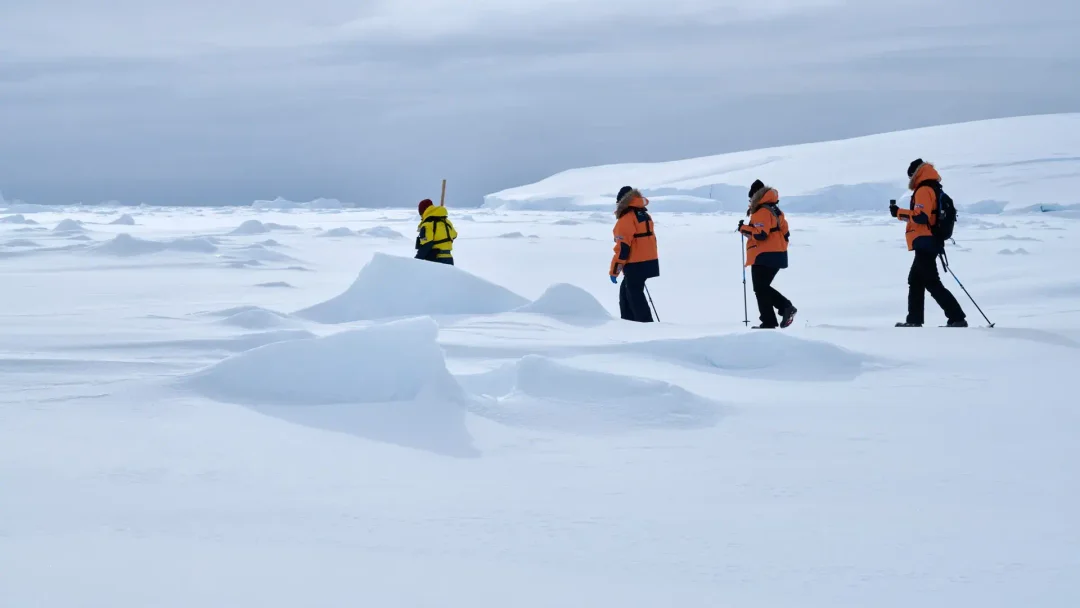
If you're prone to motion sickness, remember that some excursions can involve additional boat travel.
For example, expedition activities may use Zodiacs to reach shore or explore coastal areas.
These smaller boats can move differently from the main ship, particularly in waves or swell.
If you're sensitive to motion, consider this when reviewing your planned activities.
If you begin experiencing symptoms during your voyage:
1. Tell Someone
Let a member of the crew know that you're feeling unwell.
2. Move to a Comfortable Location
If appropriate and permitted, find a location where you can get fresh air and see the horizon.
3. Avoid Reading and Screens
Give your eyes a break from activities that require close focus.
4. Drink Water
Stay hydrated, taking small amounts if you feel nauseated.
5. Rest
Give your body time to adjust to the movement.
6. Follow Professional Advice
If symptoms are significant or persistent, speak with the onboard medical team or another appropriate healthcare professional.
Unfortunately, there is no guaranteed way to prevent seasickness.
Even experienced cruisers can feel unwell when conditions change.
The goal is therefore to reduce your risk and be prepared to manage symptoms if they occur.
Your best approach may involve a combination of choosing an appropriate cabin, selecting an itinerary carefully, preparing before departure and knowing what to do if you begin feeling unwell.

Not necessarily.
Many travellers who experience motion sickness still enjoy cruising.
The important question is how sensitive you are and how you respond to different types of movement.
If you regularly become severely motion sick, speak with your healthcare professional before booking and discuss your concerns with your cruise adviser.
They can help you consider whether a particular ship or itinerary is appropriate for your needs.
A First-Time Expedition Cruise may sound daunting, but it is now. Here are a few frequent questions that our PONANT experts have answered for you.
Have a read of some of these FAQs, but reach out to us any time: 1300 799 758.
Yes. Like any vessel travelling at sea, PONANT ships can experience movement, particularly in certain weather and sea conditions. Individual sensitivity varies.
Generally, travellers concerned about motion may prefer a cabin closer to the centre of the ship and on a lower deck, where practical. The best option depends on the specific vessel and available cabins.
PONANT offers different vessels and itineraries, so the experience can vary. If seasickness is a concern, discuss your previous experience with your cruise specialist before choosing a voyage.
Ship size and design can influence how movement is experienced, but there is no guarantee that a particular ship or size will prevent seasickness.
Yes. Expedition cruises can involve open-water crossings and changing sea conditions. However, the amount of movement varies by route, weather and destination.
Some Antarctica itineraries involve an open-water crossing to reach the Antarctic Peninsula, which can experience variable sea conditions. Travellers concerned about motion sickness should discuss the specific itinerary with their cruise adviser.
Let the crew know, move to a comfortable area where you can see the horizon if appropriate, get fresh air, stay hydrated, avoid reading or screens and seek professional medical advice if symptoms are significant or persistent.
Some people find looking at the horizon helpful because it can provide a visual reference that better matches the movement detected by the inner ear.
If you're considering medication, speak with a doctor or pharmacist before your cruise. They can advise whether a particular option is appropriate for you and explain potential side effects.
Yes, but consider the type of excursion. Some expedition activities may involve smaller boats or Zodiacs, which can feel different from the main ship.
Expedition Cruises
Discover what expedition cruising is and why it is one of the most rewarding ways to explore remote destinations.
Choosing a PONANT Ship
Learn how destination, expedition capability, ship size and onboard lifestyle can influence your choice of ship.
Choosing the Right PONANT Ship
Compare individual PONANT ships and find the vessel that best matches your expedition.
Antarctica
Explore PONANT's Antarctic expedition options and discover what makes the White Continent so extraordinary.
Kimberley
Discover one of Australia's great expedition destinations, from dramatic gorges and waterfalls to wildlife and remote coastal landscapes.
Your first expedition cruise can be one of the most memorable journeys you ever take.
You do not need to be an extreme adventurer. You simply need to be curious about the world and willing to step beyond the usual tourist trail.
BlueSun Travel can help you choose the right destination, itinerary, ship and level of expedition for your first experience.
Tell us what you would like to discover, and we will help you find the right expedition.
Contact BlueSun Travel Today
 Browse the Latest PONANT Cruise Deals
Speak with a BlueSun Expedition Cruise Specialist - 1300 799 758
Click on the button below to request a Personalised Cruise Recommendation
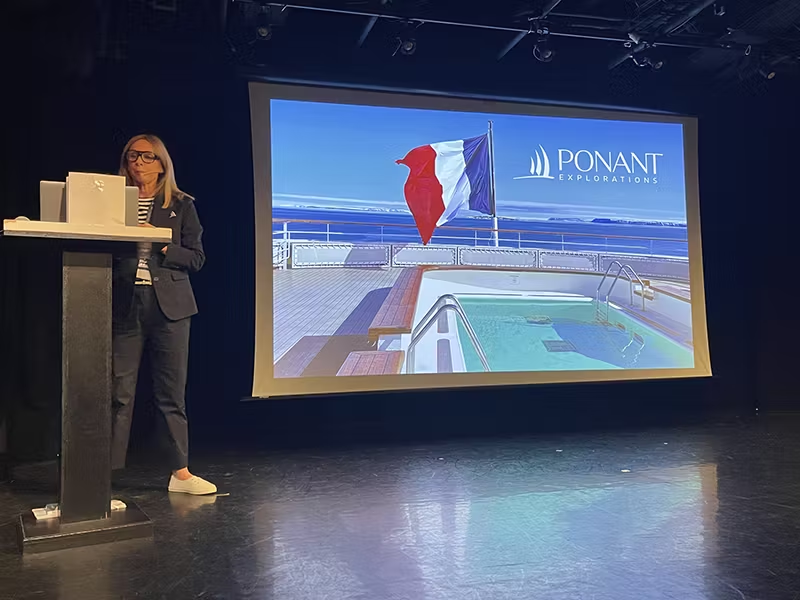
If you want to feel more prepared for your PONANT Cruise read our Seasickness Guide, talk to our friendly PONANT experts now. We can help you plan with confidence for your cruise. We are specialists in Luxury Expedition Cruises.
Call 1300 799 758 now.
Call us 7 days a week!